
Are We Speedrunning Another Global Financial Meltdown?
It’s starting to feel a little… familiar.
Not in a “nostalgia-core” kind of way — more like the uneasy déjà vu of watching warning lights flicker on the global economy dashboard while everyone pretends it’s just a glitch.
Because right now, a growing number of economists and market watchers are quietly asking the same question: Are we at the early stages of another 2008-style financial crisis?
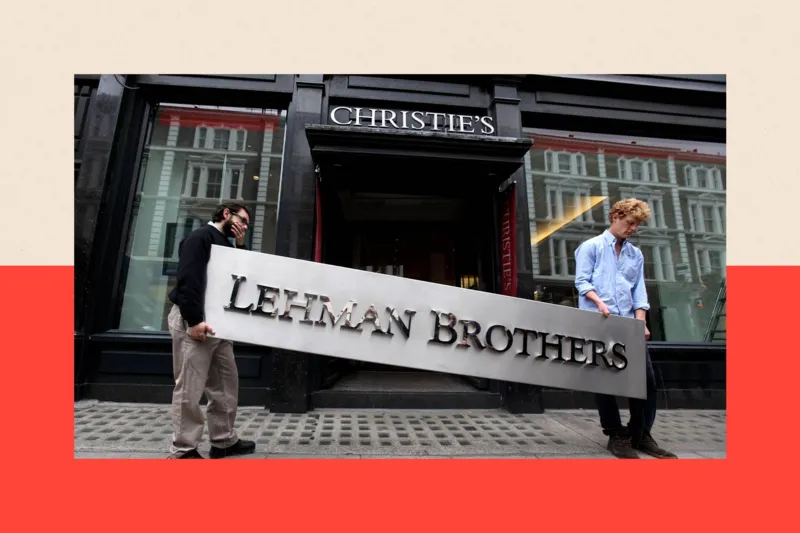
Before the crisis that engulfed the world economy in 2008, there were early warning signals in some parts of the financial system.
Back in 2007, the cracks started in the U.S. housing market. Risky mortgage investments began collapsing as homeowners defaulted on loans they couldn’t afford.
Major financial institutions like Bear Stearns and BNP Paribas froze investor withdrawals or shut down funds entirely. That was the first domino.
Then came the real panic.
Banks stopped trusting each other. Lending froze. Money stopped moving. That freeze created what’s known as a “credit crunch,” dragging the global economy into crisis.
Fast forward to today.
We’re seeing similar warning signals again.
Some of the biggest names in finance — including BlackRock, Blackstone, Apollo Global Management, and Blue Owl Capital — are facing massive withdrawal demands from investors.
We’re talking billions.
And here’s the twist: these aren’t traditional banks. They’re part of the growing private credit market — alternative lenders that stepped in after banks pulled back following stricter regulations.
Now those same lenders are under pressure.
Funds are reporting losses, limiting withdrawals, and struggling with liquidity.
So what could the next meltdown look like?
If 2008 was about housing and banks, the next crisis might come from private credit markets and shadow banking systems.
And unlike 2008, today’s financial system is more complex — and possibly more fragile.
There’s also a bigger issue.
Global relations in 2026 are more tense than they were in 2008.
Back then, governments and central banks worked together to stabilize the system. Today, cooperation is less certain, with rising trade tensions and weaker global alignment.
This raises another concern: will policymakers even have the tools to respond effectively?
After 2008, central banks cut interest rates, printed money, and bailed out institutions.
Now, interest rates are already high in many regions, inflation remains a concern, and governments have less financial flexibility.
So the big question is: if another crisis hits, do we still have enough tools left to contain it?
For now, nothing has fully broken. But multiple warning signs are flashing.
It’s not a confirmed meltdown — but it could be the buildup.
Because financial crises don’t happen overnight. They build quietly… then hit all at once.
And history has shown that early warnings often seem small — until they’re impossible to ignore.
Больше
Image: BY GOOGLE GEMINI In 2026, one of the biggest trends shaping the internet is the rapid rise of artificial intelligence in everyday digital platforms. From social media to blogging websites and creative tools, AI is changing how people create, publish, and discover content online. Just a few years ago, AI was mostly used for simple automation like chatbots or basic recommendations. Today,...

Let’s not sugarcoat this. If you keep falling for the wrong people, it’s probably not just bad luck. It’s not some cosmic curse. And it’s definitely not because “every good person on earth disappeared overnight.” Nah. Sometimes the truth is way less romantic than that. Sometimes the real reason you keep ending up with the wrong person is because...

If you’ve been anywhere near Nigerian Twitter (sorry, X), TikTok, or even your group chats lately, then you already know one thing: The Return of Arinzo isn’t just a movie — it’s a full-blown cultural moment. Led by Nollywood icon Iyabo Ojo, the long-awaited sequel has pulled in a jaw-dropping ₦224 million in just two weeks at the West African box office. Yes, you read...
Google has introduced new pricing options for its Gemini API, making it easier for businesses and developers to control how much they spend on artificial intelligence. If you're not into tech, don’t worry—this guide breaks everything down in a simple and clear way. Simple idea: You now pay based on how fast you want results and how important the task is. What Is the Gemini...
After years of speculation, heated debates, and some genuinely bold predictions, we finally have a clearer picture of how much Grand Theft Auto VI might cost at launch. And surprisingly, it’s not as outrageous as many feared. For a while, there was a growing belief across the gaming community that GTA 6 could become the first mainstream title to push past the $100 mark for a standard...