There are some movies where the problem isn’t necessarily that the story is bad. Sometimes, the story is actually good enough to make you wonder how much better the film could have been with more time, stronger character development and deeper conversations.
The Price is one of those movies.
The film presents a potentially compelling story about brotherhood, love, guilt, grief, forgiveness and a secret that could destroy two people’s lives. Unfortunately, while the ingredients are there, the film doesn’t always do enough with them. By the time I got close to the halfway point, I found myself expecting the story to become much more layered, but it never quite reached the emotional depth its premise promised.
The Story
The story follows Promise, a cab driver who has spent much of his life supporting his younger brother, Prosper, through school. When Prosper completes his NYSC and returns home, he begins searching for a job and eventually gets employed at a company owned by Adeola.
Adeola is dealing with the pain of losing her brother in a car accident. The driver responsible fled the scene, leaving her with unanswered questions and years of unresolved anger.
Then the story takes an interesting turn.
Prosper and Adeola fall in love, unaware that Prosper’s brother, Promise, is connected to the tragedy that changed Adeola’s life.
That setup is arguably the strongest thing about The Price. A man unknowingly falls in love with the sister of the man his brother accidentally killed. Meanwhile, the brother carrying that secret is forced to watch the relationship develop right in front of him.
There is a lot that could have been explored here.
Unfortunately, the film often tells us what its characters feel instead of giving us enough scenes to actually experience those emotions alongside them.
A Story That Needed More Showing and Less Telling
One of the biggest issues for me was the way Promise’s relationship with Prosper was presented.
We are repeatedly told that Promise loves his brother and sacrificed a lot for him. But love like that needs to be demonstrated, not repeatedly announced.
Give us a flashback. Show Promise making a difficult sacrifice for Prosper. Show the brothers struggling together. Show us what their lives were like before Prosper graduated.
Those moments would have made Promise’s eventual confession much more painful because we would have understood exactly what was at stake.
Instead, the audience is largely expected to accept the brotherly bond because Promise keeps telling us about it.
The same problem affects Adeola’s grief. We understand that losing her brother affected her deeply, but the film doesn’t spend enough time showing us how that loss shaped the person she became.
The Romance Needed More Development
Adeola and Prosper’s relationship also moves incredibly quickly.
The film doesn’t give the relationship enough room to breathe before it becomes serious. Their conversations don’t always feel like the conversations of two people gradually discovering each other. At times, the emotional progression feels like the movie has already decided that they are in love, so the characters simply move along with the script.
There is a moment where Adeola expresses her love and Prosper essentially responds with “I know,” followed by an emotional exchange and a kiss.
The scene wants us to feel the weight of their love, but the film hasn’t done enough groundwork to make that moment hit as hard as it should.
Love stories need chemistry, but they also need connection. We needed to understand why these two people specifically fell for each other.
The Promise Problem
Promise’s secret is the heart of the film, and Nosa Rex does bring some personality to the role.
Nosa Rex is known for his comedic abilities, and some of that natural charm comes through here. In a story that can become quite heavy, his presence provides a little levity.
But Promise’s character needed more of a life outside his relationship with Prosper.
We know he is a cab driver. We know he loves his brother. We know he carries the guilt of the accident.
But who is Promise?
What does he want for himself? Does he have friends? A relationship? Family outside Prosper? What was his life like before the accident?
These questions matter because the more complete Promise’s character becomes, the more devastating his secret becomes.
Prosper’s Character and Performance
John Ekanem plays Prosper, and this is where I had one of my biggest problems with the character.
The screenplay presents Prosper as a young man who has just completed NYSC, is looking for work and depends heavily on his older brother. But the character doesn’t always look or carry himself that way.
From the way he dresses to the way he presents himself, Prosper often comes across as much more established than someone fresh out of NYSC and searching for employment.
Even the famous “NYSC copper” presentation didn’t quite convince me. The glasses, grooming and overall appearance made him look more like a young professional who had already found his footing than someone just beginning his career.
That disconnect made it harder for me to completely buy into the character.
There is also something about his reaction to Adeola’s romantic advances that felt too effortless. When your boss suddenly tells you she loves you, especially when you’ve only recently started working for her, there should be some surprise, hesitation or uncertainty.
Instead, Prosper sometimes reacts as though he has been waiting for the moment.
It makes the relationship feel less natural.
The Dialogue Needed More Work
The dialogue is another area where I think the film missed an opportunity.
The problem isn’t that every line has to be profound. It doesn’t. But a story dealing with guilt, bereavement, brotherhood, revenge and forgiveness needs conversations that allow the characters to confront those emotions.
There are moments where the actors are performing the emotion, but the dialogue isn’t giving them enough to work with.
The audience needed to hear Prosper question his brother. Adeola needed to confront the contradiction of loving Prosper while discovering what his brother had done. Promise needed to explain the accident and live with the consequences of what he had kept hidden.
Those conversations could have carried the movie.
Instead, several important emotional developments happen quickly, leaving the audience to fill in the gaps.
The Food and Poisoning Sequence
One particular sequence stood out to me for the wrong reason.
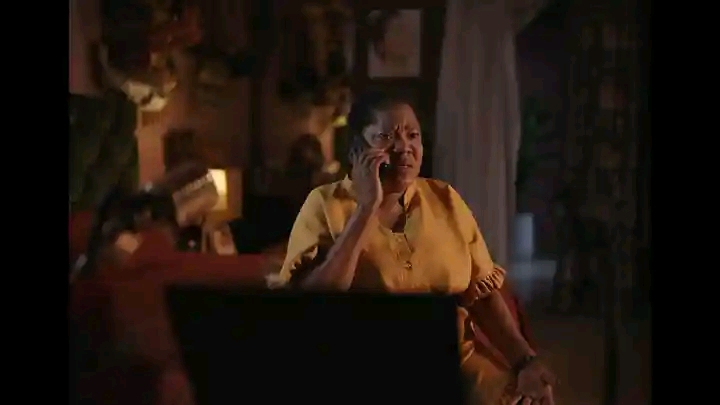
After Prosper eats food and begins coughing before collapsing, Promise becomes convinced that Adeola tried to poison his brother.
But how exactly did Promise know the food came from Adeola?
Prosper could have bought the food from a restaurant. Someone else could have given it to him. The film needed to establish that connection before Promise’s accusation could make complete sense.
It is a small detail, but it matters because moments like this can pull the audience out of the story.
When you’re watching a drama built around a serious secret, you want the characters’ decisions to feel logically connected to what the audience knows.
Adeola’s Grief Needed a Better Resolution
Perhaps my biggest disappointment was the resolution of Adeola’s grief.
For most of the movie, her brother’s death has defined her. She is angry, emotionally guarded and difficult with the people around her. Her grief appears to have affected her relationships and the way she interacts with the world.
Then, after hearing what appears to be her late brother’s voice telling her to forgive, everything changes.
Suddenly, she is ready to let go of the past and declares that she is free and happy again.
I understand what the filmmakers were trying to communicate.
Forgiveness can be liberating.
But forgiveness doesn’t necessarily erase grief.
A more convincing resolution would have allowed Adeola to struggle with the decision. Perhaps she could forgive Promise without pretending that what happened no longer hurts. Perhaps she could acknowledge that she still misses her brother while choosing not to let anger control the rest of her life.
That would have made the ending feel more human.
Performances
There are good performances in The Price, even though some characters don’t always feel fully developed.
Nosa Rex brings his usual personality to Promise and provides some welcome comic relief.
Omeche Okoh gives Adeola plenty of emotional energy, although at times I felt the performance became too heightened. Some of her reactions felt forced rather than naturally emotional. That may also be partly a directorial issue, because actors ultimately work within the interpretation established by the director.
John Ekanem’s performance as Prosper didn’t completely work for me, particularly because his physical presentation and mannerisms didn’t consistently match the character described by the story.
Still, the cast clearly put effort into their performances. My bigger issue was with the characters and the writing surrounding them.
Final Thoughts
The Price had the foundation of a potentially powerful emotional drama.
A brother accidentally kills a woman’s sibling. Years later, his own brother falls in love with that woman without knowing the connection. The truth eventually comes out, forcing everyone involved to confront love, guilt, anger and forgiveness.
That’s a story with real potential.
But potential isn’t the same thing as execution.
The film needed more character development, stronger dialogue, more believable relationship progression and a more gradual emotional resolution. Most importantly, it needed to show us why these characters feel the way they do instead of repeatedly telling us.
The title The Price suggests that somebody has to pay a price for what happened. I wanted to feel that price more deeply.
Instead, the film moves through several potentially powerful moments without giving them enough emotional weight.
There are things to appreciate here, particularly the premise, the attempt at balancing drama with some humour and the performances in certain scenes. But for me, the story ultimately felt like it stopped at the surface of something that could have been much deeper.
Phisk Watch Rating: 4.5/10
The Price isn’t without merit, but it needed more patience, stronger character development and much deeper conversations to become the emotional drama its premise promised.