Timini Egbuson vs Zubby Michael: Who Is Winning Two Years After the 2024 Clash?


In February 2024, a seemingly casual exchange between two Nollywood actors, Timini Egbuson and Zubby Michael, set social media ablaze. What began as a disagreement over who was the bigger actor in Africa quickly became one of the most talked-about entertainment debates of the year. The conversation took place on Ebuka Turns Up Africa, a reality television series hosted by Nigerian media personality and former Big Brother Naija host, Ebuka Obi-Uchendu, and released on Prime Video.
During the exchange, Timini expressed confidence in his position as one of Africa’s biggest actors. Zubby Michael, however, was having none of it. He countered Timini’s assertion by declaring himself the biggest actor in Africa and arguing that his colleague’s popularity was limited to certain parts of the country. According to Zubby, he had conquered the YouTube market, the DVD market and, increasingly, the cinema space. He then made the statement that would dominate entertainment conversations for days: he could buy Timini.
It was a bold claim, delivered with the confidence of a man who believed his achievements spoke for themselves. Unsurprisingly, the internet did what it does best. Fans picked sides, social media users debated their respective careers, and arguments about fame, wealth, influence and success in Nollywood took centre stage.
But beyond the banter and the viral sound bites, there was a more interesting question hiding beneath the controversy. What does it really mean to be a successful actor in Nigeria? Is success measured by the quality of the films you appear in, the awards you receive, the money you make, your visibility on streaming platforms, or the number of ordinary Nigerians who recognise your face?
Two years later, that question has become even more relevant. Both actors have continued to make moves across different parts of the entertainment industry. Timini has increasingly appeared in YouTube-distributed movies, while Zubby has also made appearances in projects associated with premium streaming platforms, including Netflix. Their evolving careers suggest that the boundaries separating different segments of Nollywood are not as rigid as they once appeared.
Perhaps, then, the most interesting outcome of the infamous exchange is not that one actor has defeated the other. It is that both men have continued to expand their reach, demonstrating why the Nigerian entertainment industry cannot be understood through a single measure of success.
The 2024 Debate: Two Actors, Two Different Markets
To understand the significance of the argument, we must first appreciate the different spaces in which both actors had established themselves.
Timini Egbuson had built a strong reputation as a leading face in contemporary Nigerian cinema and streaming entertainment. Known for his performances in romantic dramas and youth-oriented stories, he became particularly recognisable among audiences who followed premium streaming releases and modern Nollywood productions. His screen presence, carefully cultivated public image and association with polished productions helped position him as one of the prominent actors of his generation.
Zubby Michael, on the other hand, had cultivated a different kind of popularity. He was a familiar face to audiences who regularly watched Nigerian films distributed through YouTube and other accessible channels. His frequent appearances in local productions, particularly films that attracted large online audiences, helped him maintain a strong connection with viewers who might not necessarily follow the same entertainment trends as Timini’s core audience.
Neither path was inherently superior. They simply reflected different routes to visibility in a country with diverse viewing habits, income levels, cultural preferences and access to entertainment.
The difficulty arose when both careers were measured against each other as though they operated within exactly the same market.
Timini’s visibility on premium streaming platforms could suggest a strong position among viewers who consumed that kind of content. Zubby’s popularity on YouTube could indicate a different but equally important connection with a broader audience. However, the size of an actor’s audience cannot be established merely by naming the platform on which their films appear. Actual viewership, audience engagement, commercial performance and the ability to attract viewers over time all matter.
Still, the contrast between their distribution channels exposed an important reality about Nollywood: an actor can be highly visible in one entertainment space while remaining less familiar to audiences who spend their time elsewhere.
And in Nigeria, where the cost of entertainment matters to millions of households, that distinction is particularly important.
Netflix May Be Premium, but YouTube Is Already in People’s Hands
There is a reason YouTube occupies such an important position in Nigeria’s entertainment ecosystem. It is accessible, familiar and available on devices that millions of people already use. For viewers who cannot afford multiple paid streaming subscriptions, YouTube provides an opportunity to watch movies, music videos, comedy, interviews and other forms of entertainment without committing to another monthly payment.
This does not mean every Nigerian has equal access to YouTube. Internet subscriptions, data costs, device quality and network coverage remain significant barriers. Nevertheless, YouTube offers a relatively accessible entry point into online entertainment, particularly when compared with services that require a recurring subscription.
For an average Nigerian household trying to manage food, transportation, electricity, school fees and other essential expenses, paying for a premium streaming service may not always be a priority. A Netflix subscription can be attractive, but it must compete with the many other demands on a household’s income.
YouTube operates differently. Although viewers still need internet access and may incur data costs, the platform allows them to discover and watch a wide variety of content without necessarily paying a subscription fee. A viewer can search for a Nigerian movie, find a channel that uploads films regularly and settle down to watch a story without first considering the cost of another streaming service.
That convenience has helped create a substantial audience for Nigerian movies distributed on YouTube. Producers and distributors can reach viewers who might otherwise struggle to access their films through cinemas or premium streaming platforms. Actors whose projects perform well in this environment can become familiar faces in homes across different parts of the country.
This is where Zubby Michael’s position in the 2024 debate becomes especially significant. His association with YouTube-distributed movies gave him visibility in a market that should not be dismissed simply because it operates differently from the premium streaming economy.
An actor’s face appearing regularly on a platform that people use every day can be a powerful advantage. Familiarity builds recognition, recognition encourages viewers to click on new releases, and repeated exposure can strengthen an actor’s relationship with an audience.
For a filmmaker, this recognition can be commercially valuable. For an actor, it can help sustain demand for future appearances. And for viewers, it creates a sense of familiarity that can influence what they choose to watch.
The important lesson is that accessibility can be just as significant as prestige. A production may enjoy the recognition associated with a premium platform, but another may achieve a different kind of reach by meeting viewers where they already are.
Did the ‘I Can Buy Timini’ Remark Open His Eyes?
One of the most interesting ways to interpret the controversy is to consider whether it highlighted a gap in Timini’s market visibility.
Before the exchange, Timini had established himself in a particular segment of Nollywood. His career included prominent roles in contemporary films, romantic dramas and productions associated with the industry’s increasingly sophisticated streaming and cinema markets. He had good reason to be confident in his achievements.
However, being recognised in one segment of the industry does not automatically translate into equal visibility across every other segment.
The Nigerian film audience is not one uniform group. Some viewers primarily watch films in cinemas. Others subscribe to streaming services. Many discover movies through YouTube, while others still follow films through television, social media recommendations and informal sharing among friends and family.
An actor can enjoy considerable recognition among one group and still have room to grow among another.
This is why Zubby’s reference to YouTube during the argument was worth paying attention to. Beneath the provocative language was a legitimate point about distribution and audience reach. He was drawing attention to a market in which he believed he had established a stronger presence.
It would be difficult to claim that the argument directly caused Timini to change his strategy without hearing that explanation from the actor himself. We should not assume that a public disagreement was the sole reason for any subsequent career decision. Actors routinely adjust their choices in response to new opportunities, audience demand, changing production models and the commercial realities of the industry.
Nevertheless, the timing makes the development interesting.
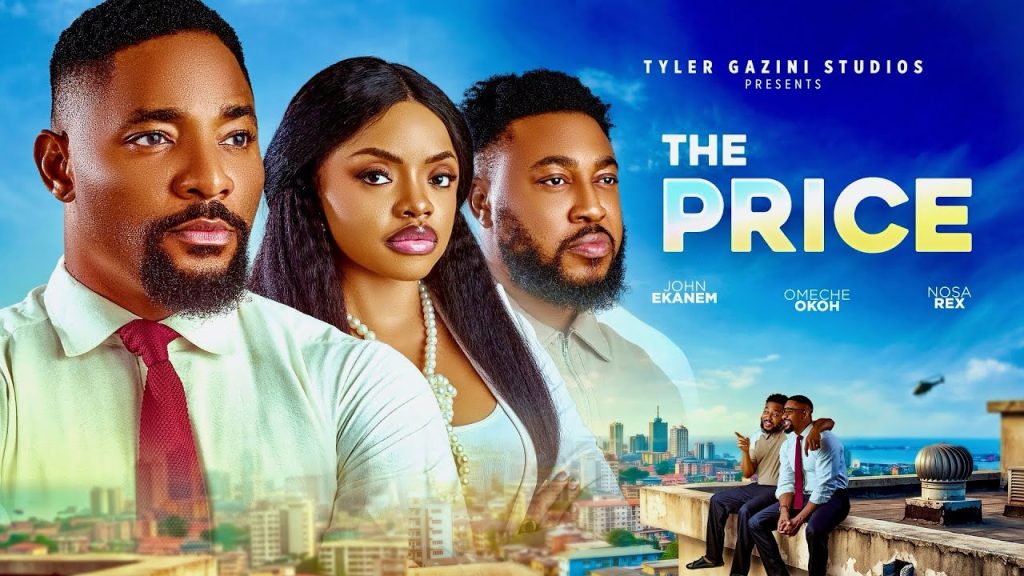
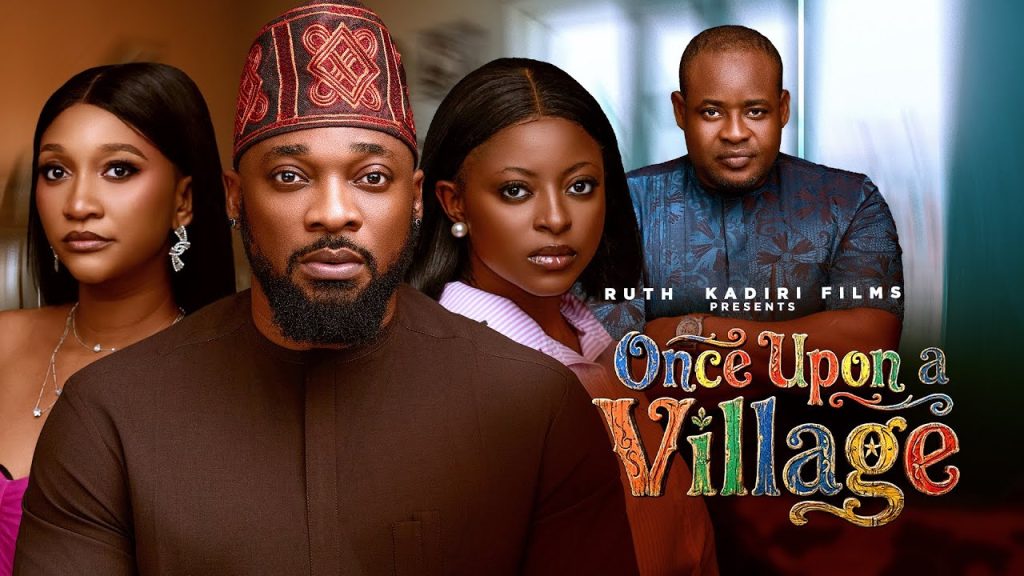
In the years following the controversy, Timini has become increasingly visible in YouTube-distributed Nigerian movies. His presence in that space has helped bring his face and performances to viewers who may not have followed all his earlier projects.
For an actor who had already built a strong career, this expansion matters. It represents an opportunity to reach a different audience, explore new production arrangements and strengthen his relevance in a market where viewers have considerable influence over which films gain attention.
If the 2024 exchange encouraged people to think more seriously about the relationship between an actor and the platforms through which audiences discover their work, then it may have served a useful purpose beyond the entertainment value of the argument.
The bigger lesson is that no actor should become so comfortable in one market that they overlook the opportunities available in another.
Success requires more than being good at what you do. It also requires understanding where your audience is, how that audience consumes entertainment and what you can do to remain visible as viewing habits change.
Timini Egbuson Is Doing More Than Just Showing Up on YouTube
Timini’s growing presence in YouTube-distributed movies deserves to be considered on its own merits.
Moving into a different distribution space is not necessarily a simple decision for an established actor. Different platforms may come with different production budgets, audience expectations, release strategies and promotional demands. An actor must find ways to remain convincing on screen while adapting to the realities of the projects available to them.
For Timini, the opportunity is to demonstrate that his appeal is not restricted to one category of film or one method of distribution.
His screen presence has made him a recognisable figure in contemporary Nollywood, particularly among audiences who enjoy romance, drama and stories centred on relationships and personal ambition. Taking that appeal into YouTube-distributed productions gives him another avenue through which to connect with viewers.
It also offers an opportunity to challenge assumptions about what certain actors should or should not do.
There was a time when the entertainment conversation could treat cinema releases, premium streaming productions and YouTube movies as separate levels of achievement. The implication was sometimes that moving between these spaces represented a step up or a step down.
That thinking is becoming increasingly difficult to defend.
A film’s value cannot be determined solely by the platform on which it is released. The quality of the writing, the strength of the performances, the effectiveness of the direction and the audience’s response all contribute to the final result.
A well-made YouTube movie can entertain viewers, generate meaningful engagement and give its cast an opportunity to demonstrate their abilities. Equally, a premium streaming production can disappoint if its story fails to connect with its intended audience.
What matters is the work itself and how effectively it reaches the people for whom it was made.
Timini’s participation in YouTube-distributed films therefore should not be interpreted as an abandonment of his previous achievements. Instead, it can be viewed as an expansion of his professional reach.
He is bringing an established screen identity into another part of the Nigerian entertainment market. If those projects continue to connect with viewers, the move could strengthen his overall position in Nollywood.
It would be premature to declare him the best actor on YouTube based on visibility alone. Such a judgment would require a closer assessment of his performances, the range of his roles, the consistency of his projects and the response they receive. But there is a reasonable case for saying that he has become a notable presence in this space and deserves to be taken seriously there.
The important thing is that he is participating in a market that reaches viewers beyond the audience traditionally associated with his career.
Zubby Michael Has Been Building His Audience for Years
While Timini’s growing presence on YouTube is an interesting development, Zubby Michael’s position in the discussion cannot be separated from the years he has spent building his own audience.
Zubby has established himself as a recognisable figure in Nollywood through frequent appearances in Nigerian films and a screen persona that many viewers have come to associate with him. His work has helped him maintain a visible place in the market for locally distributed movies, including productions that reach audiences through YouTube.
Consistency is an important part of that achievement.
In an industry where new films are released regularly and audience attention is constantly shifting, an actor who remains visible across numerous productions has more opportunities to be discovered by new viewers and remembered by existing fans.
Repeated appearances also allow audiences to develop expectations about the kinds of stories and characters an actor may bring to the screen. Some viewers seek out particular performers because they enjoy their established screen identities. Others discover them through a new film and subsequently explore their earlier work.
For Zubby, this familiarity has become part of his public identity.
His association with YouTube-distributed films has also helped demonstrate the commercial importance of audiences who consume Nigerian movies online. These viewers are not simply people watching content because it happens to be free. They are an audience with preferences, loyalties and the ability to determine which films attract attention.
A movie that connects with this audience can generate conversations, attract repeat viewership and introduce its actors to people who may not regularly visit cinemas.
That is a meaningful contribution to the industry.
It is also important to recognise that Zubby’s career is not confined to a single distribution channel. His appearances in projects associated with premium streaming platforms, including Netflix, demonstrate that actors can operate across different parts of the entertainment market.
The same actor can remain popular among viewers who enjoy locally distributed films while also participating in productions intended for other audiences.
This crossover is significant because it challenges the idea that an actor must belong exclusively to one category of Nollywood.
Zubby’s years of experience in the industry and his established audience give him a different professional position from that of an actor who is only beginning to explore the YouTube market. His progress should therefore be assessed in the context of the career he has built, rather than reduced to a comparison of who appears on which platform.
Who Has Done Better Since 2024?
This is where the debate becomes complicated.
If the question is whether Timini has made meaningful progress in expanding his presence on YouTube, the answer is yes. His growing participation in that market suggests an awareness of the importance of reaching audiences through multiple distribution channels.
If the question is whether Zubby has continued to maintain his relevance while also appearing in projects associated with premium streaming platforms, the answer is also yes.
But deciding who has done better requires us to establish what we mean by success.
Are we comparing the number of movies released? The number of people who watch those movies? The commercial value of the projects? The quality of the performances? The ability to attract producers? The strength of each actor’s following? Or the capacity to move between different segments of Nollywood?
These are related questions, but they are not interchangeable.
An actor might appear in more films without necessarily delivering the strongest performances. Another might work on fewer projects but secure greater recognition for the quality of those roles. One actor might have a large following on social media, while another attracts substantial audiences to films without maintaining the same level of online visibility.
Even view counts require careful interpretation. A movie with millions of views has achieved considerable exposure, but views alone do not establish how much money the production generated, how many viewers watched the entire film or how profitable the project was.
Without reliable, comparable information about their filmographies, earnings, audience figures and commercial performances, declaring either man the overall winner would be more speculation than analysis.
What can be said is that both actors have remained relevant, and both have demonstrated the value of adapting to a film industry in which distribution channels increasingly overlap.
Timini’s expansion into YouTube-distributed films is a positive development for his career. Zubby’s established presence in that market remains an important advantage. Their appearances across different kinds of productions also suggest that neither actor needs to be confined to a single audience.
The more useful question may therefore be not which man has defeated the other, but what each has achieved by continuing to evolve.
The Nigerian Audience Is Bigger Than One Platform
There is another reason the comparison deserves a rethink: Nigeria’s entertainment audience is too diverse to be represented by a single platform.
The person who watches a movie on Netflix may also spend hours watching films on YouTube. Someone who enjoys cinema releases may return home and stream a locally produced drama on their phone. A viewer who discovers an actor through a YouTube movie may later pay to watch that same actor in a cinema production.
These behaviours are not mutually exclusive.
The growth of digital entertainment has created more opportunities for Nigerian filmmakers to reach audiences, but it has also made the market more complicated. Viewers can choose between different platforms depending on their budgets, interests, available internet access and the kind of story they want to watch.
This creates opportunities for actors who understand the importance of remaining accessible.
An established performer who appears only in productions available to a relatively narrow audience may miss opportunities to connect with viewers elsewhere. Meanwhile, an actor who understands the strengths of different distribution channels can build visibility across several markets.
However, accessibility alone is not enough. The content must still be engaging. A familiar face may encourage a viewer to click on a film, but the story and performance ultimately influence whether that viewer continues watching and returns for another release.
This is where Nollywood’s future becomes especially interesting.
The industry does not necessarily need to choose between premium streaming productions and YouTube-distributed movies. Both can serve different purposes, attract different audiences and create opportunities for actors, producers, writers and directors.
The challenge is to produce compelling films and find the most effective ways to distribute them.
For actors, that means remaining open to opportunities without compromising the quality of their work. For producers, it means understanding the audience they intend to reach. For viewers, it means enjoying a wider range of films and performances than might have been available to them in the past.
And for entertainment commentators, it means recognising that success in Nollywood cannot always be reduced to a contest between two celebrities.
Why We Should Stop Turning Every Career Into a Competition
Celebrity rivalries are entertaining. They generate headlines, attract attention and give fans something to debate. The Timini-Zubby exchange was compelling partly because both actors were confident enough to defend their positions publicly.
But entertainment debates become less useful when they reduce complex careers to a simple question of who is bigger.
Actors have different strengths, different professional histories and different opportunities. Some build their reputations through the range of their performances. Others become known for consistency, commercial appeal or their ability to connect with a particular audience.
Many successful actors combine several of these qualities, but they do not all follow the same route.
Timini and Zubby illustrate this point. Their careers overlap, but their paths have not been identical. Their respective audiences, film choices and professional experiences have helped shape their public identities.
Comparing them can be useful if the discussion examines specific areas of their work. We can discuss their performances, their choice of projects, their versatility and the audiences their films reach.
What is less useful is assuming that one man’s success must automatically diminish the other’s.
Timini does not need Zubby to become less successful for his own career to advance. Likewise, Zubby does not need Timini to struggle for his established audience to remain valuable.
Both can thrive in the same industry. Both can attract viewers. Both can take on new roles, explore different distribution channels and build stronger careers.
In fact, their willingness to work across different parts of Nollywood may ultimately be more important than any argument about who deserves the title of Africa’s biggest actor.
Competition can encourage actors to aim higher, but collaboration and a healthy respect for different career paths can also benefit the industry.
Nollywood is large enough to accommodate performers with different styles, ambitions and audiences. Its continued growth depends partly on recognising that diversity rather than treating every difference as a reason for conflict.
The Real Winner May Be Nollywood
Looking back at the 2024 controversy, it is tempting to focus entirely on the insult that made the exchange memorable. Yet the more important story may be the way the industry continues to evolve around actors, audiences and the platforms that connect them.
The debate drew attention to a question that deserves serious consideration: how can an actor remain relevant in a market where viewers have more choices than ever before?
One answer is to understand that no distribution channel has a permanent monopoly on audience attention.
Premium streaming services offer opportunities for particular kinds of productions and audiences. Cinemas provide a communal viewing experience and a route to theatrical recognition. YouTube gives filmmakers access to viewers who may prefer online entertainment without an additional subscription fee.
Each channel has advantages and limitations. None should automatically be treated as the only legitimate measure of success.
When actors expand into new spaces, they can introduce themselves to different audiences and strengthen their professional positions. When producers experiment with distribution, they can discover new ways to reach viewers. When audiences have more choices, the industry has more opportunities to develop different kinds of stories.
This is why Timini’s growing presence in YouTube-distributed films matters. It illustrates the potential value of reaching beyond an established audience.
It is also why Zubby’s long-standing presence in that market matters. His career demonstrates that locally distributed films and the audiences who watch them deserve to be taken seriously.
And when both actors appear in projects across different distribution channels, they help challenge the assumption that Nollywood must be divided into separate camps.
The real opportunity lies in building an industry where talent can travel, stories can reach more people and actors can grow without being forced to choose between prestige and accessibility.
Final Verdict: Timini and Zubby Have Both Done Well
So, two years after the statement that shook social media, who has done better between Timini Egbuson and Zubby Michael?
Our view at PhiskVideos is that both actors deserve recognition for what they bring to Nollywood, but declaring one the undisputed winner would require a clearer definition of success and reliable evidence to support the verdict.
Timini has continued to build his career and expand his presence in the YouTube movie market. His growing visibility in that space shows why actors should remain open to audiences beyond the platforms with which they are most closely associated. He has the opportunity to strengthen his connection with a wider cross-section of Nigerian viewers while continuing to develop his career.
Zubby, meanwhile, has spent years building a recognisable screen identity and maintaining a presence in the market for locally distributed Nigerian films. His experience and established audience are important achievements in their own right. His appearances in projects associated with premium streaming platforms also underline the fact that an actor’s career need not be restricted to one distribution channel.
Their achievements are different, but difference is not the same as inferiority.
If we judge them by their performances, we should discuss the actual roles they have played. If we judge them by commercial success, we should examine comparable box-office figures, streaming data and other reliable financial indicators. If we judge them by audience reach, we should consider the different platforms through which their films are watched.
Without agreeing on the criteria, the argument risks becoming a contest of personal preference rather than a meaningful assessment of two careers.
Perhaps the biggest lesson from the entire episode is that an actor’s success should not be measured only by where their films appear, but also by the quality of their work, their ability to connect with viewers and their willingness to evolve with the industry.
Zubby Michael may have been right to draw attention to the importance of the YouTube market. Timini Egbuson, in turn, has shown that an established actor can continue to explore new opportunities and expand his reach.
Neither development needs to come at the expense of the other.
Ultimately, Nollywood does not need one of these actors to lose for the other to win. It needs more compelling stories, better filmmaking, stronger distribution and more opportunities for talented performers to connect with audiences across Nigeria and beyond.
Timini Egbuson and Zubby Michael have taken different routes, but both have reasons to be proud of their journeys. Rather than asking which man has defeated the other, perhaps we should celebrate the fact that Nollywood has room for both.
And if there is one thing their story teaches us, it is this: in an industry as diverse as Nollywood, the biggest opportunity is not necessarily to become bigger than another actor. It is to become better at reaching the audience that appreciates your work.
Responses